



Individual courses
Based on the firm belief that academic excellence should not be limited to those studying for a degree, the university takes pride in offering further education programmes (leading to Certificates of Advanced Study) and Individual Courses to anyone wishing to be immersed in the intellectual heritage of the Dominicans.
Certificates of Advanced Study and individual courses are validated in the same way as Bachelor level courses. A paper of 12000-16000 characters, including spaces is required for each course. The study duration for a certificate is 12 months, according to the pace and rhythm of each student, under supervision by a tutor.
Choose between:
- 15 Certificates of Advanced Study, in Theological or Philosophical Studies
- Over 500 Individual Courses
Choose your course by using the search engine and click on the title to see the detailed outline.
- Accompanied courses – you have access to the learning platform and your studies will be supervised by an academic tutor. These courses are worth 3 ECTS credits which can be counted towards a study programme with Domuni or at another academic institution.
- Read only courses: you will receive the PDF of your chosen course within 48 hours
Courses search
Newman's Theory of Doctrinal Development

Application of the Newmanian Criteriology on the Axiom "Extra Ecclesiam Nulla Salus"
Opposition to ecumenism

This course will give students a general exposure to traditional opposition to Ecumenism within the perspective of the three main traditions of Christianity.
Organisational Information Systems

Completing this course will be valuable for your future career in a sense that you will be able to build your unique way of analyzing your Business environment. By applying the concepts that we will discover together, you will be able to focus on the interests of your company while building a systemic approach to your environment.
Patristics : An Introduction to the Fathers of the Church
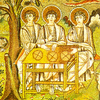
An introduction to the Fathers of the Church, from Ignatius of Antioch to John of Damascus: Writers, doctors, pastors, the Fathers of the Church
Philosophical Anthropology [2484]
This course will engage the question of how we are to construe the relationship that obtains between body and soul/mind. Rather than adopting a purely historical approach, beginning with Aristotle, the text begins with an exposition of three different contemporary treatments of this issue before proceeding to expound important aspects of Aristotle’s and St. Thomas Aquinas’s metaphysics of human nature.
Philosophy and Education

This course has been written to assist the audience to understand the philosophical underpinnings and its relevance to the complex situations of the 21st century, but also to allow learners to determine and appreciate the role of philosophy in education.
Philosophy of Entrepreneurship

The purpose of this course is to explore the philosophies underpinning economic approaches to the study of entrepreneurship.
Philosophy of Language [2491]
This course explores the major questions and debates in the philosophy of language through a selection of foundational texts from the analytic tradition and its critics.
Philosophy of Logic Part I

Logic equips individuals with the required skills to identify errors, known as fallacies in an argument. Logic generally studies the relations the mind creates between different products or contents of intellectual knowledge; that is perceptions, propositions and arguments, and seeks to understand the different relations, which arise in the human mind when it knows things. This comprehensible course on logic is divided into two parts: the second part (sections III and IV) on formal logic focus on the core aspects of categorical syllogisms.
Philosophy of Logic Part II

Just as pertinent knowledge and expertise are required when making right decisions and choices, certain skills and rules are necessary when attempting to reason correctly. Equipping one with logical skills and rules is the major aim of logic or philosophy of logic. This comprehensible course on logic is divided into two parts: the first part (sections I and II) give an overview of logic and common informal fallacies.
Philosophy of Logic [2488]
This course provides an introduction to the philosophy of logic by examining the nature, purpose, and methods of logical reasoning. It explores the definition and historical development of logic, its relationship with epistemology, the principal forms of logic, and the foundations of Aristotelian logic.
Philosophy of Religion [2499]
This course introduces the philosophy of religion as the philosophical study of religious questions, focusing on the existence and nature of a Supreme Being.
Philosophy of Science

The impact of science, not only on the world we inhabit, but also on the world of philosophy, is undeniable.
Philosophy of War [2623]
This course offers a philosophical reflection on war, understood as a moral, religious, legal, and political phenomenon. After examining its definition, causes, and value, it traces the various ways in which philosophers have sought to understand and regulate the violence of war.
Political Economy of Development [2629]
This course examines the political economy of development by analysing how political institutions, economic structures, power relations and policy choices shape development outcomes in the Global South.
Political Philosophy: An Introduction [2502]
olitical philosophy is a branch of philosophy that studies essential questions about various political issues, concepts and problems that are important to any human society.
Principles of Accounting

A study of accounting concepts and their application in transaction analysis and financial statement preparation and analysis.
Principles of Leadership

Completing this course will be valuable for your future career in a sense that you will be able to build your unique way of managing people and analyzing your Business environment. By applying the concepts that we will discover together, you will be able to focus on the interests of your company while building a more holistic approach to interpersonal relationships.
Prophets Part I
An Introduction to the Prophetical Phenomenon
The prophets understand themselves as inspired by God and claim that what they say is word of God. This is obvious from the very frequent formula they use « Thus speaks the Lord »...
Prophets Part II
Minor Prophets
Study of the Writing Prophets in Chronological Order
Prophets Part III
Isaiah, Jeremiah, Ezekiel
Study of the Writing Prophets in Chronological Order: from the Exile to the New Testament
Reading John's Gospel with Thomas Aquinas

Journey through the mind of Thomas Aquinas as you read the Gospel of John. This course introduces you to the theological thinking of the 'Angelic Doctor'.
Regional and International Children's Rights Law [2617]
This course presents the international and regional frameworks for promoting and protecting children’s rights, as well as the mechanisms designed to ensure their implementation.
Sacramental Life Part I

Part One includes: Baptism, Confirmation, Eucharist.
Sacramental Life Part II
Part Two includes: Anointing, Reconciliation, Marriage, Ordination.
Scriptural Reasoning (ENREL04)

Scriptural Reasoning is an interfaith practice where small groups of people from different religious traditions meet to read and discuss passages from their sacred scriptures together. It is not a debate aimed at proving one religion right or another wrong.
SEM31 - The Trinitarian Theology of St Thomas Aquinas
This eight-week seminar will investigate some key elements of the Trinitarian theology of St. Thomas Aquinas. We will explore the mystery of the Trinity through several fundamental texts of the scholastic tradition.
From 8th October 2018 to 2nd September 2018. Seminar closed
SEM39 - Colonialism and mission in sub-Saharan Africa

History of Christianity Seminar
April 22nd - June 16th, 2019
presented by Philippe Denis
FROM 22ND APRIL 2019 TO 16TH JUNE 2019. SEMINAR CLOSED
Social Political Philosophy [2506]
This course intends to familiarize the students with the debates and contributions of the main philosophical scholars and theories which have developed through history from the time of Greek Sophists through the XXth century.
The Book of Esther

The story of Esther
The Book of Judith

The book of Judith is named after its main hero whose achievements it tells and glorifies. Like the books of Tobit and Esther, the book of Judith focuses on a main character and tells in detail the salvation given by God in a critical situation.
The Book of Tobit

The name which designates the book has not always been the same through the centuries. The name « Tobiah » in English or « Tobie » in French comes from the Latin Vulgate which gives the same Latin name, Tobias, to the father and the son. It has been used in the past decades but is generally no longer in use.
The Centrality of the Cross in Hans Urs Von Balthasar’s Christology
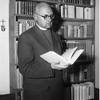
This course focuses on the centrality of the Cross in Hans Urs von Balthasar’s Christology.
The Creed

The Creed (divided in 12 parts)
The economic thought of Thomas Aquinas (SEM147)

Explore Thomas Aquinas’s contributions to economic thought, examining the morality of transactions, economic ethics, and the historical context of medieval economics.
The Epistles of John

This course places the Epistles of John within their context in the New Testament with the Gospel of John. It invites you to think for yourself about the meaning of the texts, and the relationship between the Epistles and the Gospel.
The Gospel of John and the Odes of Solomon

The Odes of Solomon are a collection of 42 Christian hymns from the late first or early to mid-second centuries. They were composed in Syria and known from Egypt to Rome. They celebrate Christ as the Logos, the Virgin Birth, the Trinity, the crucifixion and descent of Christ into Hades. Discover these Odes and their meaning.
The Gospel of St John

The principal aim of the course will be to furnish an appreciation of Johannine literature as Good News, with particular reference to the theological perspective of the author. The course will further aim at providing a basic familiarity with, and a critical assessment of, contemporary critical thinking on the Johannine writings, particularly the Gospel of John.
The New Testament as Jewish Literature

We propose to define each term of the title, in order to understand the cultural background that was the matrix of Christianity.
Bible seminar from April 9 to June 3, 2018
The New Testament in the Light of Rabbinical Literature (THEN162)

Jesus of Nazareth did not teach in a cultural vacuum: he and the Sages of the Talmud (successors to the Pharisees) shared the common context of Second Temple Judaism. This course offers an insight into this shared historical and religious universe, to better understand the links and differences between the message of Jesus in the New Testament and the Jewish rabbinical tradition. It highlights how these two great traditions respond to and influence each other, while following distinct paths.
The Origins of International Law: The School of Salamanca [2613]
This course examines the role of the School of Salamanca in shaping modern legal thought through the concept of natural law.
The Origins of Philosophy [2479]
This course offers an introduction to the nature, purpose, and development of philosophy. It explores what philosophy is, why it has remained a central intellectual discipline, and how it relates to other fields of inquiry, particularly theology.
The Origins of the Quran I
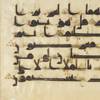
This course introduces to the history of the text of the Quran, to its language and style, and to the traditional "Qur'anic sciences".
The Origins of the Quran II
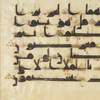
This course introduces to the history of the text of the Quran, to its language and style, and to the traditional "Qur'anic sciences".
The Philosophy of Benedict Spinoza: Rationalism, Substance, and the Ethics of Freedom [2496]
This course offers a rigorous and critical examination of the philosophical system of Benedict de Spinoza (1632–1677), one of the central figures of early modern rationalism.
The Second Vatican Council
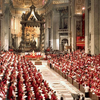
The Second Vatican Council, a pastoral Council; which, according to Pope John XXIII, had the concern, “that the sacred deposit of Christian doctrine should be guarded and taught more efficaciously.”
The Song of Songs

The Song of Songs is a lock whose key had been lost long ago. As a matter a fact, no book that small has caused that many commentaries and questions along centuries.
The Trinitarian Christology of Hans Urs von Balthasar
In sum, the Father’s kenosis to the Son, and the kenosis of the Father and the Son to the Holy Spirit correspond to the very essence of God which can only be love.
Professeur Fr. Chukwudi Onyinyechukwu ANOLIEFO, op
Theological Anthropology

St. Thomas Aquinas on Man as made to the Image of the Trinity and on the Trinitarian God in whose Image we are made and to whom we are Conformed.
Theology of Grace : God’s Life in us - The Authentic Life of our Human Spirit
Grace is God’s life in us, the authentic life of our human spirit or what our life is truly called to be. Without our participation in the life of God, Father, Son and Holy Spirit (Trinity) through baptism, we cannot truly be Christian and without grace we cannot truly live a Christian life.
Thomas Aquinas and the Islamic Intellectual Tradition
Thomas never refers to Muslims by their name.
Thomas Aquinas Studies
A specialised course in Thomistic issues by fr. Gilles Emery, OP, a leading specialist in this discipline !
For MA students only
To pay 150 or 50
Trinitarian Ontology

Both traditions, classical Greek metaphysics and Trinitarian theology, link “being” with life, but Trinitarian theology deepens the connection by making “relation” essential to the “First Principle” in a way that ultimately produces something new, a Trinitarian ontology.
Trinity Part I
This course examines the foundations of trinitarian doctrine in revelation.
Trinity Part II
This course examines the foundations of trinitarian doctrine in revelation.
Trinity Part III
This course examines the foundations of trinitarian doctrine in revelation.
Wisdom Literature - part one

Wisdom movements are universal in the ancient world and, from a certain perspective, they influenced or even were the basis or the models of biblical movements.
Wisdom Literature - part two

Wisdom movements are universal in the ancient world and, from a certain perspective, they influenced or even were the basis or the models of biblical movements.
Women in Post-Conflict Settings: An Analysis of Key Issues [2624]
This course examines gender issues in post-conflict settings, emphasizing the continuity between armed conflict and reconstruction. It shows that, although women are disproportionately affected by conflict-related violence, they often remain underrepresented in the decision-making bodies responsible for shaping peace and reconstruction.